Michael Ende: Imagination as Truth.
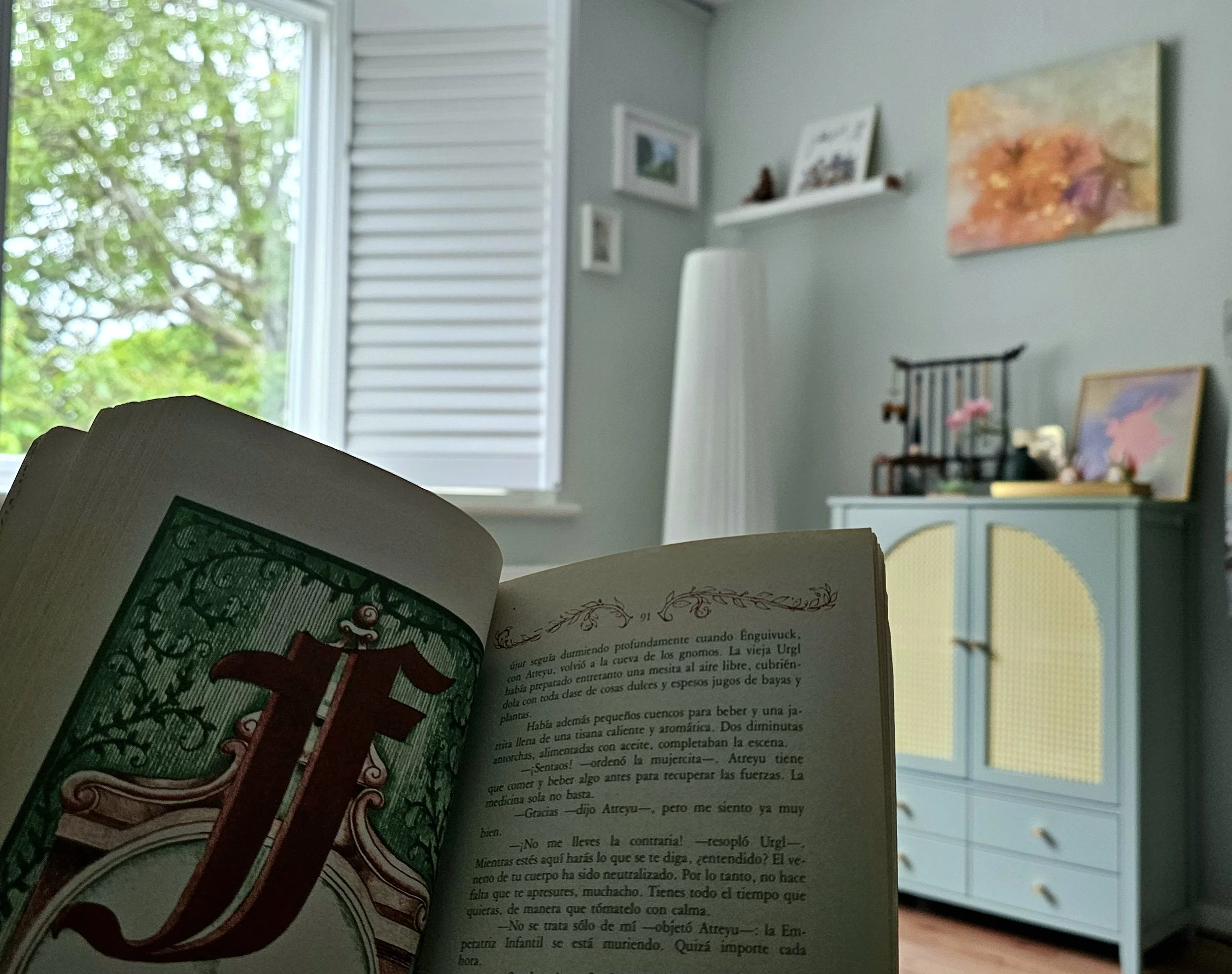
I have been re-reading The Neverending Story alongside essays and transcripts, including one from a conference on children’s literature that Michael Ende gave in Tokyo. I not only enjoy the worlds and characters he presents, but there is something more philosophical that truly resonates with me.
I share the same pursuit of trying not to become truly an adult, not by being childish, but childlike. By adulthood, Ende meant embracing a disenchanted, mutilated, banal, uncreative view of the world: the refusal to surrender imagination and curiosity in exchange for the cruelty of plain, cold facts.
On his view of writing, I understand that even if his books are children's literature, the reader is not supposed to be a child, but an ageless person with the same sensibility, a mirror. As Atreyu saw Bastian as a reflection in the Magic Mirror Gate in The Neverending Story. Writing, reading, creating in general, as an impulse to begin a journey not knowing what or who might follow. An authentic creative game where, in the process, you may find companions and new landscapes.
Art can bypass the boundaries of time, creating and renewing values through words, painting, music. Much of the original meaning can become blurred, even within the same century, the same generation, even within the artist themselves. There is no single, literal interpretation. But again, it is part of the game: playing to rediscover what we already hold inside, our own reflection, to know ourselves and our values through others. With values, I rephrase Ende here, though in my mind I picture it more visually. I see images, colours, moods, a constellation that guides you along a path that fills you with wonder and leaves you feeling pleasantly grounded. Values, he said, do not exist by themselves, nor are they innate or obvious. They need us; they need to be created and constantly renewed in order to exist. As the Childlike Empress needed a new name to continue existing.
Ende points out the difference between defending a value and the creation or renewal of one, comparing a furious pamphlet about the destruction of trees to a poem, a painting, an artwork that makes you love trees and feel the beauty and mystery within them. In the name of rational truth, so much can be lost. Instead, the interpretation of facts through metaphor can be understood more deeply and felt more closely, without sacrificing the charm. The same fact can be described from multiple angles. The same person can be photographed in different ways and from different perspectives and still yield a poor picture, an incomplete reflection that fails to capture their spirit. Yet a naive painting may show more authenticity and credibility, as in the absurd world of Chagall.
He chose not only imagination and beauty as essential pillars of this resistance, but also humour. Without humour, all these pillars would be set in shifting sands. To take nothing too seriously, to avoid fanaticism and dogma; without that, the fairy dust simply blows away.
I do profoundly believe what he said: that people appreciate nothing so much as someone who offers them a little beauty, and that the world today, perhaps more than ever, holds a nostalgic, almost visceral thirst for it.
I suppose when I paint, it is just a tiny, microscopic attempt on my part to renew these values.